Dynamo 0.0.1

The last year I've become more and more involved with Dynamo, the open source visual programming interface that eats, drinks and sleeps with Revit. Since Christmas I've arranged multiple Computational Design workshops at Dark with the goal of increasing interest in visual programming and narrowing the gap between BIM and Computational Design tools. We've had Nathan Miller from CASE over the Atlantic for a fantastic training session, and I've started speaking about Dynamo at international conferences.
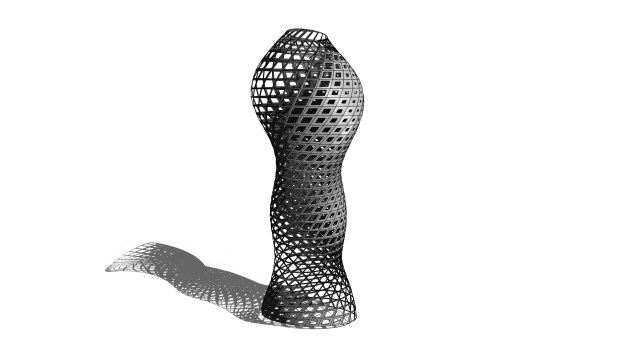
Why? Apart from the obvious fact that I like it, I think there are three very interesting aspects of playing around with it. First, and most apparent perhaps, Dynamo provides an opportunity to work with complex and optimized shapes and structures in far less time than traditional tools will. Second, since it interacts deeply with the Revit API, it allows us to develop and share BIM automation scripts. In other words, you, me and everyone can create automated behavior and extend the hard-coded capabilities of BIM and Revit with little or no experience with programming. Last, and for me most interesting, it opens the first door to a vision of designers taking ownership of, and designing their own design tools. Ever since the Personal Computer became mainstream almost all building designers have been slaves to what software developers have done. This might provide an opportunity for the building design industry to start getting actively involved in how software works.
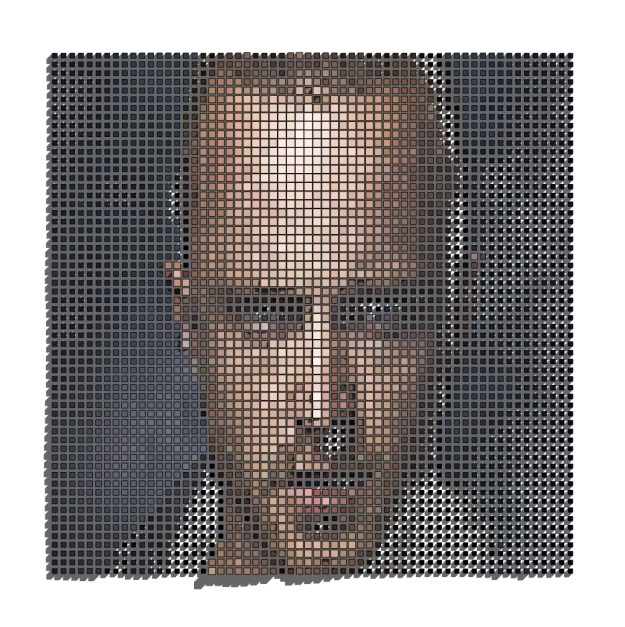
And that's pretty interesting stuff. Ever since my introduction to CAD (you can read more about that here), I've spent an enormous amount of energy on working for a more efficient and fun way of deigning better buildings. It's hard not to imagine Dynamo, or an evolved version of it, being part of that now.
Very well. So what have I done lately?
Dynamo in Structural Design
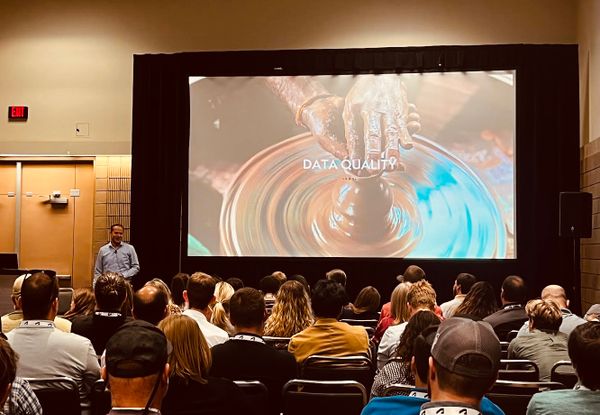
At the recent Revit Technology Conference (RTC) Australasia in Melbourne, I gave my first ever presentation of Dynamo in Structural Design for an international audience. I got overwhelmingly positive feedback after the session, which confirms my suspicion that visual programming and computational logic in structural design has some promise.
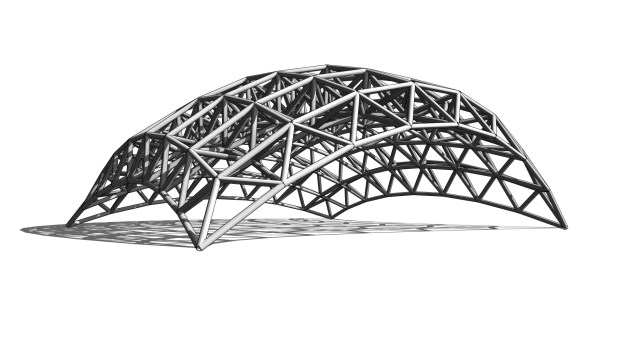
During the hour and fifteen minutes I basically went through two examples of working with Conceptual Modeling, Math and Dynamo, both involving some version of a space frame.
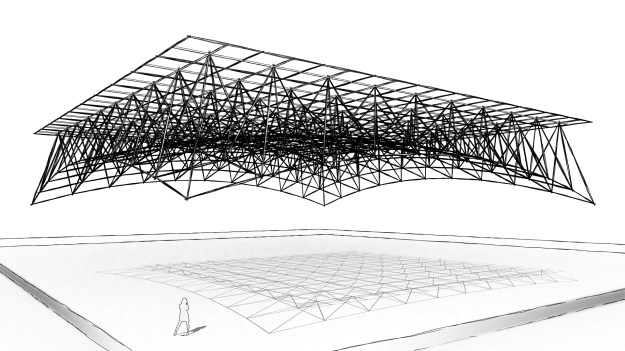
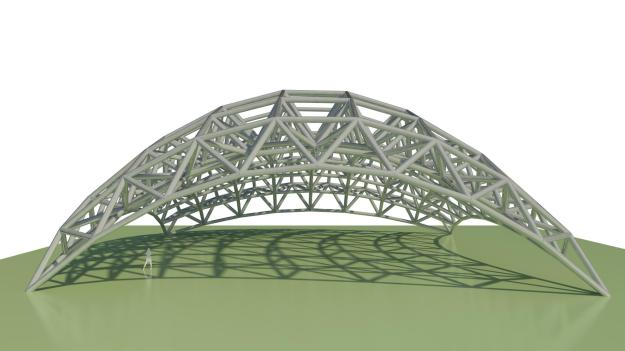
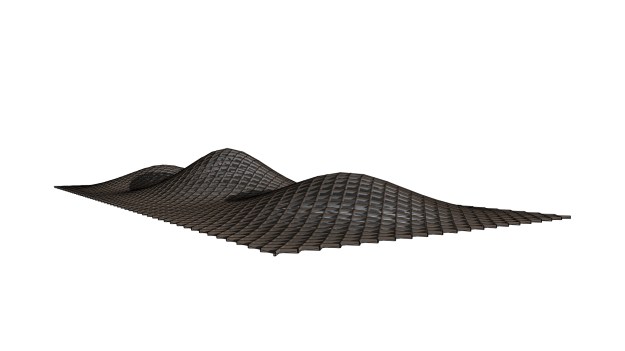
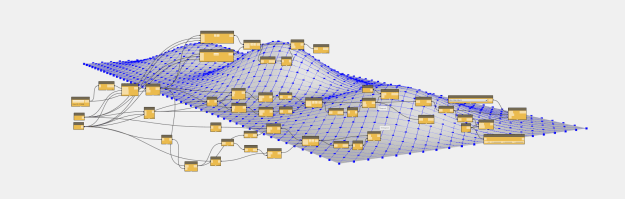
The Dynamo exercise builds a double-curved space frame of native Revit Structural Framing elements, that include Analytical data. This offers loads (pun intended) of potential re-use in structural analysis workflows.
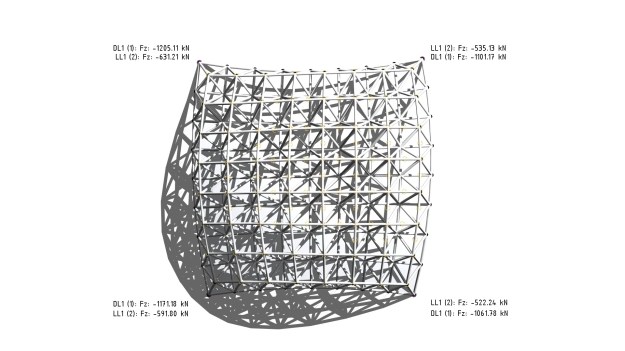
The frame has a computational attractor system that makes it thicker in the middle and more narrow by the supports, all perfect for an optimized structure.
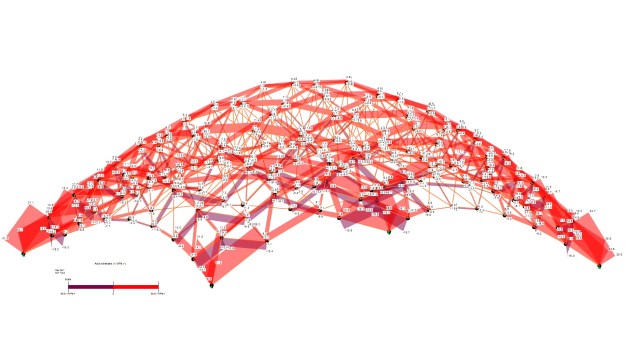
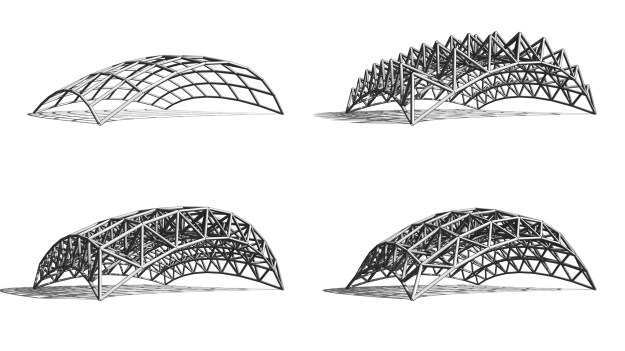
Those who will be at RTCNA in Chicago can see this material on the Friday of the conference. Not only can you see how it works; I'm modifying the presentation into a lab so you can interact as well. I wasn't originally scheduled to be there, but dues to cancellations the committee asked me to come. Hope to see you there!
Training
If you, or someone you know, is interesting in learning how Dynamo works, interacts with Revit and extends the capabilities of BIM tools, please do not hesitate to contact me for availability and details. All my training sessions are highly interactive, and we use a lot of improvisation to find the right problems to solve. I'm also constantly updating the Dynamo part of my Training schedule, in addition to the Gallery.
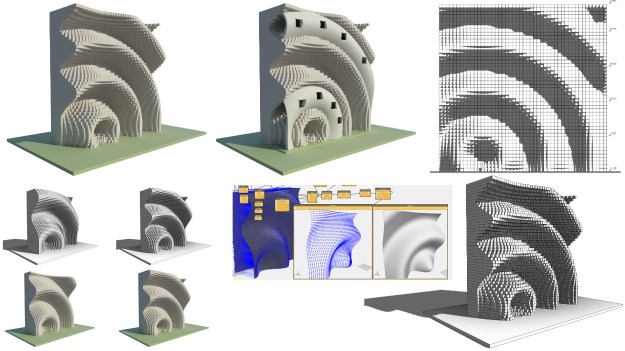
Workshops and development
I will continue to host Computational Design workshops at Dark. During these we usually start by going around the table with a quick recap of recent developments, and continue by working collaboratively on different design problems. Please let me know if you would like to be invited!
Acknowledgments
Three individuals come to mind when I'm thinking about who to thank for my new found passion and skills. First Nathan Miller at CASE for traveling far across the continents to help me and my Norwegian colleagues and friends take a leap in Dynamo knowledge. Only months before his first child was born. Congratulations and thanks! Second Dynamo Master Andreas Dieckmann for his extreme Dynamo and Python knowledge, but perhaps most of all because of his inspiring attitude towards sharing that knowledge along with vast amounts of valuable packages. World class innovation. And last, but not least, my own mentor Julien Benoit. Our brainstorming, regular meetings and common goals are fantastic to be a part of, and I look very much forward to our collaboration in the future, first of with a joint lab at RTC Europe. Interestingly, a little over a year ago I didn't know who any of these individuals were. 2013 really seemed to be the year of fantastic new connections.
What lies in the future then?
Like most Dynamonians, I have realized that Python is something that just has to be learnt. It's not a question of if any longer, but when. It's when you dive into Python that you really start automating BIM, as you can build a lot of custom Revit interaction through Revit API. Also, I both hope and believe I will get a chance to use this technology on innovative architectural and sustainable design soon. I've done some simple research on competitions and early phase design iterations, but it lacks depth. Oh, and I need to make Dynamic Relaxation work.
I hope some of this can contribute to expanding interest around this new box of technologies. My enthusiasm and knowledge of this has little value if there is no one I can show it to. That's you. Let's do it!